A dental implant prosthesis is the visible tooth or teeth that attach to implants placed in your jaw. This article explains, in plain language, how a prosthesis fits onto implants, the parts involved, the common types, who is a good candidate, the treatment timeline, benefits and risks, and basic cost factors. If you’re deciding whether a dental implant prosthesis in Flowood, MS is right for you, this guide will help you know what to ask at your first appointment.
What Is a Dental Implant Prosthesis?
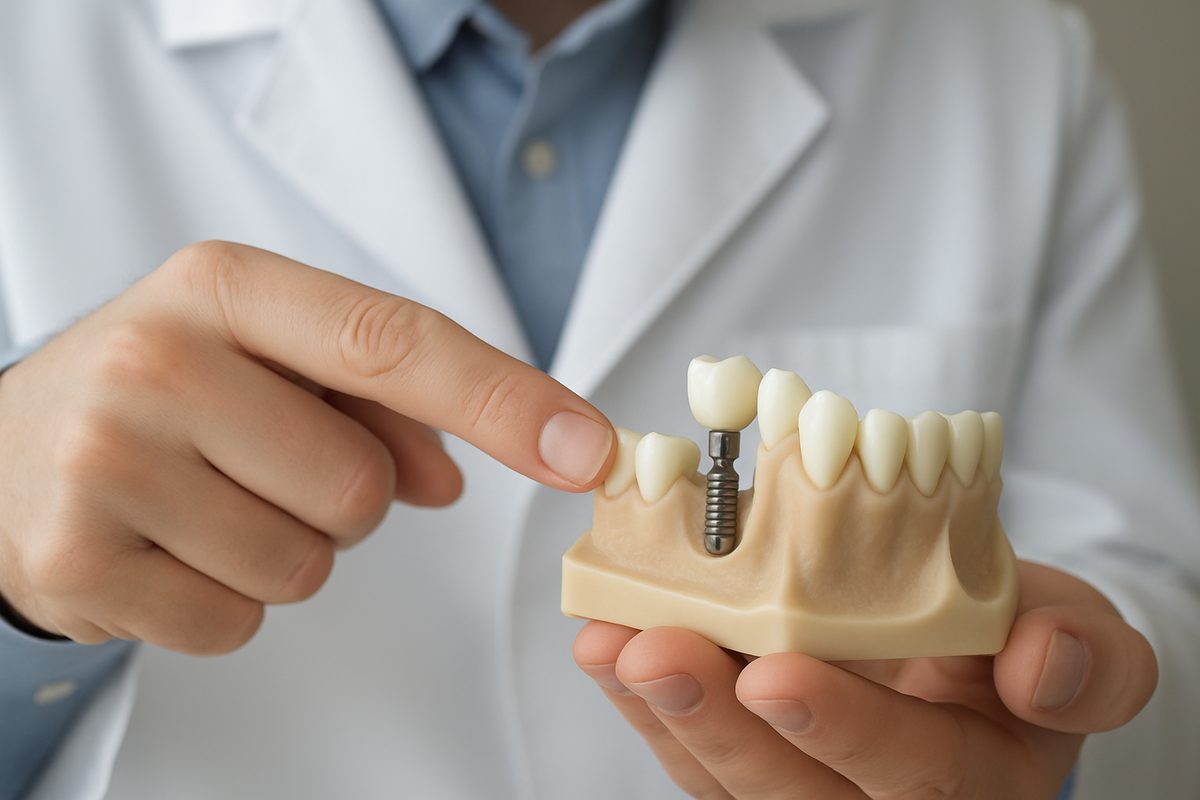
A dental implant prosthesis is the replacement tooth or set of teeth that connects to dental implants. The implant itself is a small post placed in the jawbone. The prosthesis is the crown, bridge, or denture you see and use to chew. Together with an abutment (the connector), the prosthesis restores function and appearance much like natural teeth.
Key Components: Implant, Abutment, Prosthesis
The implant (fixture)
Implants are usually made from titanium or zirconia. They act like artificial tooth roots and fuse with the bone through a process called osseointegration. This fusion provides the stability needed for the prosthesis so it won’t shift when you chew or speak.
The abutment
The abutment is the small connector that joins the implant to the prosthesis. Abutments can be stock (pre-made) or custom-made to match your bite and gum shape. The right abutment helps the prosthesis fit naturally and stay secure.
The prosthesis itself
The prosthesis is the visible part: a single ceramic crown, a multi-tooth bridge, or an implant-supported denture. Materials include porcelain, ceramic, and acrylic over a metal or zirconia framework. Prostheses can be screwed on or cemented to the abutments, depending on the case.
Types of Dental Implant Prosthesis
Common options include:
- Single implant crown – replaces one missing tooth; looks and functions like a natural tooth.
- Implant bridge – replaces several adjacent teeth using fewer implants than one-per-tooth.
- Implant-supported overdenture – a removable denture that snaps onto implants for better stability than traditional dentures.
- Full-arch fixed prosthesis (All-on-4/All-on-X) – a permanent arch of teeth supported by 4 or more implants; ideal for full-mouth replacement.
Durability and maintenance vary: single crowns and fixed bridges need routine care similar to real teeth, while dentures may need periodic relines. Full-arch fixed prostheses are highly durable but need professional checkups and good home hygiene.
Who Is a Good Candidate for a Dental Implant Prosthesis?
Good candidates typically have:
- Overall good health and controlled chronic conditions
- Healthy gums or treatable gum disease
- Adequate jawbone or willingness to have grafting if needed
- Non-smokers or those willing to quit for treatment and healing
- Realistic expectations about time, cost, and maintenance
Age alone is not a disqualifier. If bone is lacking, options like bone grafts, sinus lifts, or advanced techniques such as zygomatic implants can provide solutions.
Typical Treatment Process & Timeline
The usual steps are:
- Consultation and 3D imaging to assess bone and plan placement
- Digital scans and treatment planning, often with surgical guides
- Surgical placement of implants (with local or IV sedation if desired)
- Healing period for osseointegration (weeks to months)
- Attachment of abutments and final prosthesis placement
Some patients may receive temporary teeth the same day as implant placement. Digital planning and surgical guides make outcomes more predictable and comfortable.
Benefits and Risks of a Dental Implant Prosthesis
Major benefits:
- Function like natural teeth — improved chewing and speech
- Preserve jawbone and facial structure
- Stable, long-lasting solution compared with dentures
- Improved confidence and appearance
Common risks and complications:
- Infection at the implant site
- Implant failure or loosening (rare with good planning)
- Need for bone grafts or additional surgeries
- Temporary discomfort or swelling after surgery
Experienced planning, proper hygiene, and regular follow-up lower these risks significantly.
Cost, Insurance, and Financing Basics
Cost depends on:
- Number of implants and type of prosthesis
- Need for bone grafts, sinus lifts, or extractions
- Materials and lab work for the prosthesis
- Use of advanced digital planning and surgical guides
Dental insurance coverage varies. Many practices offer payment plans or third-party financing to spread costs. Ask about a detailed estimate and financing options during your consultation for a dental implant prosthesis in Flowood, MS.
Is a Dental Implant Prosthesis Right For You?
Quick self-checklist:
- Do you want a stable, long-term tooth replacement?
- Are you in generally good health or willing to treat medical issues first?
- Can you commit to the time and cost of implant treatment?
- Are you willing to maintain oral hygiene and attend follow-ups?
If you answered yes to most items, schedule an exam and 3D imaging to get a personalized plan for a dental implant prosthesis in Flowood, MS.
About Revive Denture & Implant Studio and Dr. Joseph Boone
Revive Denture & Implant Studio in Flowood offers handcrafted, custom restorations and full implant care under one roof. Dr. Joseph Boone brings advanced implant training and years of experience, including complex cases and zygomatic techniques. The practice uses on-site digital imaging, intraoral scanning, CAD/CAM, and surgical guides to plan predictable prostheses. Sedation options and patient education resources help make treatment comfortable and clear.
Ready to learn if a dental implant prosthesis in Flowood, MS is right for you? Book a consultation for an exam and 3D imaging, request a personalized treatment plan, and ask about financing options. A digital plan gives you clear steps, costs, and a timeline to restore your smile.