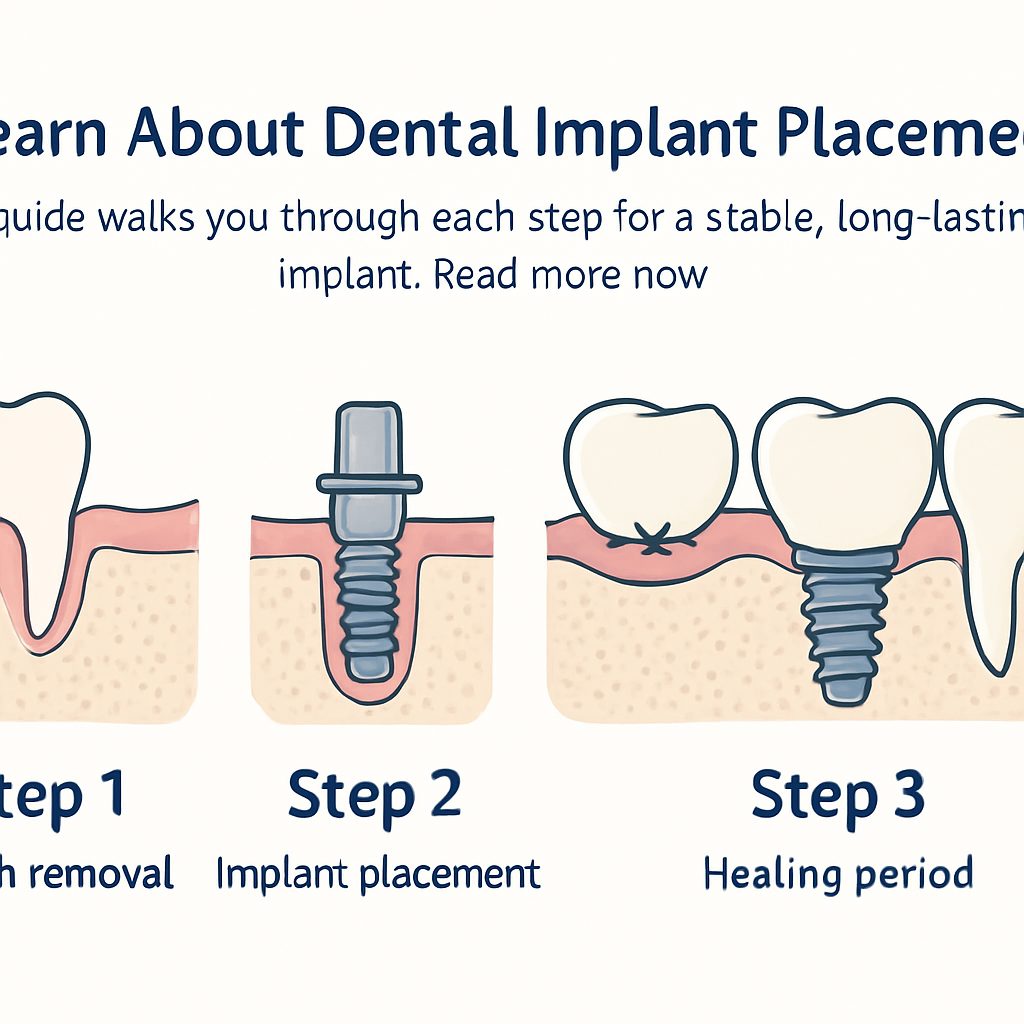
This post walks patients through the common steps in dental implant placement in Flowood, Mississippi and explains what to expect at each stage and why each step matters. Use this guide to learn the timeline, key procedures, and how each phase helps build a stable, long-lasting dental implant.
Initial consultation and medical evaluation
During the first visit your provider reviews medical and dental history, performs an oral exam, and checks overall health. Digital x-rays or a CBCT scan are often taken to view bone levels, tooth roots, and any hidden infection. This step determines candidacy and identifies issues like active infection or significant bone loss that must be addressed first.
Diagnostic imaging and digital planning
CBCT scans and intraoral digital scans create 3D images of your jaw and teeth. Virtual planning software maps ideal implant positions and angulation. This digital workflow reduces surprises during surgery, predicts prosthetic outcomes, and lets the team design a surgical plan and guide that improve accuracy and safety.
Deciding on preparatory treatments
Some patients need treatments before implants can be placed. Your clinician will explain timing and options based on imaging and exam findings.
Extractions
Teeth that are infected, fractured, or unsalvageable may be removed. Extractions can be done at a separate appointment or at the time of implant placement, depending on healing needs and bone condition.
Bone grafts and sinus lifts
If bone is thin or missing, grafting or a sinus lift builds volume to support an implant. These procedures add healing time—often several months—before the implant can be placed, but they greatly improve long-term implant stability.
Fabrication of surgical guide and temporary prosthesis
Using the digital plan, the team fabricates a CAD/CAM surgical guide that directs implant placement precisely. If needed, a temporary crown or denture is made to wear during healing. Temporaries protect the site, preserve appearance, and help shape gum tissues for the final restoration.
Implant placement surgery
On surgery day you’ll have local anesthesia, and sedation is available if requested. The surgeon exposes the implant site, prepares the bone, and inserts the implant. The guide may be used for exact positioning. The implant is then covered or fitted with a healing cap and the site closed with sutures.
Healing and osseointegration
Osseointegration is the process where bone bonds to the implant surface. Typical healing takes 3–6 months depending on location and bone quality. You’ll follow activity and diet restrictions, avoid chewing on the area, and attend follow-up visits to monitor healing.
Placing the abutment and taking final impressions
After osseointegration, the abutment (connector) is attached to the implant. The team takes digital impressions or intraoral scans to capture precise details for the final crown, bridge, or denture. These digital files guide fabrication of the definitive restoration.
Final restoration and adjustments
The final crown, bridge, or implant-supported denture is fitted. The dentist checks bite, function, and appearance, then makes minor adjustments to ensure comfort and proper chewing. Final polishing and occlusal checks complete the process.
Aftercare, maintenance, and follow-up
Good home care—brushing, flossing, and interdental cleaning—protects the implant. Watch for redness, swelling, persistent pain, or loosening and report concerns promptly. Regular dental cleanings and periodic exams keep implants healthy for years.
Common risks and how they’re managed
Typical complications include infection, nerve irritation, sinus issues, or implant failure. Careful planning, imaging, sterile technique, and following post-op instructions reduce risks. If complications occur, the team manages them quickly with antibiotics, adjustments, or additional procedures when needed.
Why choose Revive Denture & Implant Studio for implants
Revive Denture & Implant Studio offers one‑roof care with on-site digital imaging, CAD/CAM restorations, custom surgical guides, sedation options, and financing support. Dr. Joseph Boone’s advanced implant training and experience with complex cases support precise planning and predictable results in Flowood.
Ready to review a personalized timeline and treatment plan? Schedule a consultation to discuss options, costs, and comfort measures. Visit the clinic’s pre-op/post-op resources, before-and-after gallery, and video library to learn more before your appointment.