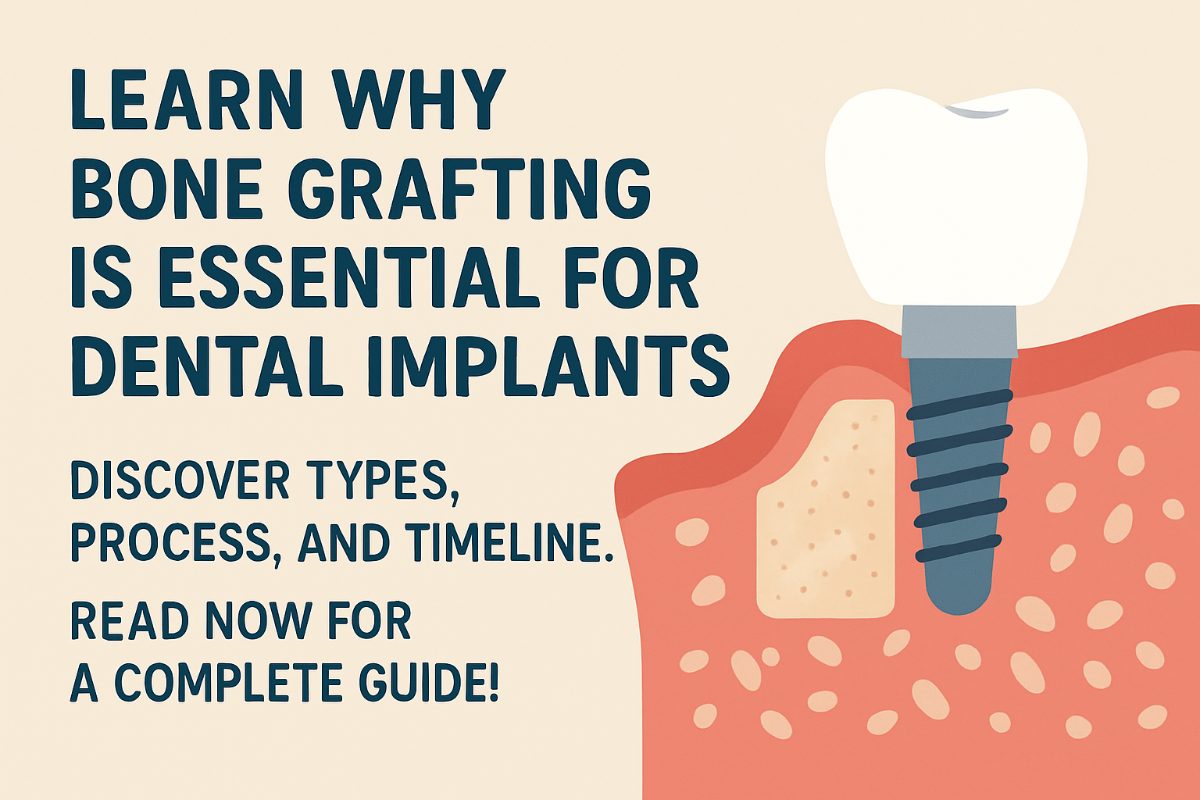
If you’re reading this, you want clear answers about bone grafting for implants. This guide explains why bone grafting matters, who may need it, the main types of grafts, the typical timeline, risks, costs, and what to expect during treatment. We use plain language and practical next steps so you can decide if bone grafting and dental implants are right for you.
Why Bone Grafting For Implants May Be Needed
Bone Loss After Tooth Loss And Atrophy
When a tooth is lost, the jawbone around that tooth begins to shrink. Over months and years this shrinkage (atrophy) can make the ridge too thin or short to hold a dental implant. Without enough bone loss, implants won’t be stable or may fail.
Bone Loss From Disease Or Trauma
Periodontal (gum) disease, long-standing infections, or an injury can destroy bone around teeth. That lost volume often must be rebuilt before a predictable implant can be placed.
Anatomic Limits That Require Grafting
Some people have natural anatomy that limits implant placement—thin ridges in the lower jaw or sinuses that expand downward in the upper jaw (sinus pneumatization). These anatomic issues often require bone grafting to create the space and support an implant.
Types Of Bone Grafting For Implants
Autograft (Patient’s Own Bone)
An autograft uses bone taken from the patient—often the jaw, hip, or tibia. It integrates very well because it’s living tissue, but it means another surgical site and more recovery.
Allograft (Donor Human Bone)
Allografts come from human donors and are processed for safety. They avoid a second surgery and are widely used for dental implants. Modern processing makes them safe and effective for many cases.
Xenograft And Alloplast
Xenografts (animal-derived) and alloplasts (synthetic materials) are other common options. They act as a scaffold for new bone to grow and are useful when a large volume is needed or the patient prefers to avoid human-donor tissue.
Sinus Lift (Lateral Vs Crestal) And Ridge Augmentation
A sinus lift raises the sinus floor and places graft material in the upper back jaw. Lateral sinus lifts use a side window; crestal lifts go through the implant site. Ridge augmentation builds up thin ridges so implants sit in solid bone.
Biologics And Growth Factors (PRF, BMP)
Platelet-rich fibrin (PRF) and growth proteins (like BMP) are used to speed healing and improve graft success. These can be combined with graft materials to enhance bone formation.
How Clinicians Determine If Bone Grafting For Implants Is Needed
Clinical Exam And Dental History
Your dentist checks gum health, measures ridge width, reviews tooth history, and looks for infection or signs of bone loss. That exam helps decide if grafting is necessary.
Imaging And Digital Planning
3D CBCT scans and intraoral scans show bone volume and critical structures (nerve, sinus). Digital planning and surgical guides let clinicians map implant position and predict whether grafting is required.
What To Expect During The Grafting Procedure
Anesthesia And Comfort Options
Grafting can be done with local anesthesia, nitrous oxide, or IV sedation options depending on the extent and patient comfort needs. Your team will discuss options before treatment.
Step-By-Step Of A Typical Graft
Most grafts follow similar steps: a small incision to expose bone, placement of graft material, sometimes a barrier membrane, and sutures to close. Aftercare includes short-term antibiotics, pain control, and soft-food instructions.
Risks And How Complications Are Managed
Risks include infection, graft failure, bleeding, and sinus complications for upper-jaw grafts. Clinicians reduce risk with careful planning, sterile technique, and follow-up. If problems occur, treatments range from antibiotics to revision grafting.
Healing Timeline And When Implants Can Be Placed
Healing varies by graft type and location. Small grafts often integrate in about 3 months; larger grafts or sinus lifts can take 6–9 months. In some cases clinicians place implants at the same time as the graft (simultaneous); in others they stage the care and place implants after full healing.
Factors That Affect Success
Smoking, uncontrolled diabetes, poor oral hygiene, low-quality graft material, and clinician experience all affect healing and success. Following post-op directions and maintaining good health improves outcomes.
Cost, Insurance, And Financing Basics
Cost depends on graft type, size, and whether implants are placed at the same time. Insurance sometimes covers grafting when it’s medically necessary, but coverage is limited. Many practices offer in-house financing, third-party payment plans, or bundled pricing for grafting plus implants to make treatment more affordable.
How To Choose A Provider For Bone Grafting For Implants
Look for clinicians with advanced implant training, use of CBCT and digital planning, surgical guides, and sedation options. Ask to see before-and-after photos and get clear explanations of graft materials and timelines. For patients near Flowood, MS, consider a center with on-site digital imaging and an implant-focused team.
Revive Denture & Implant Studio in Flowood, MS offers on-site digital imaging, sedation choices, and an implant-focused team led by Dr. Joseph Boone—options that can help with complex grafting and dental implants while keeping planning and care under one roof.
Frequently Asked Questions
Does Bone Grafting Hurt?
Most patients report moderate discomfort that is well-controlled with medication. Sedation and local anesthesia make the procedure comfortable during surgery, and recovery discomfort usually lessens in a few days.
How Long Until I Can Get My Permanent Crown?
If implants are placed after graft healing, expect 3–9 months before implant placement and then another 3–6 months for osseointegration before final crowns. Timelines vary with the case.
Are Bone Grafts Safe Long-Term?
Yes. When done properly, bone grafts are long-lasting and integrate into your jaw. Choice of material and follow-up care affect long-term stability.
Are There Alternatives To Bone Grafting?
Alternatives include short or narrow implants, zygomatic implants for very upper jaw cases, or removable denture options. A clinician will explain which choices fit your anatomy and goals.
What Happens If I Skip Grafting?
Without grafting, you may be limited to dentures or less stable implant options. Implants placed in inadequate bone risk failure, poor esthetics, or nerve/sinus complications.
If you think you might need bone grafting for implants, schedule a consult to review your CBCT, discuss options, and get a clear timeline and cost estimate. Revive Denture & Implant Studio in Flowood, MS can evaluate bone grafting Flowood, MS needs, review financing, and help plan a treatment path toward reliable dental implants.