Many patients ask, “Is bone grafting always needed for dental implants?” Bone grafting is a procedure that rebuilds lost jawbone so an implant has enough support. This short, practical read explains when grafting matters, common alternatives, what the grafting visit looks like, and local cost and care options. You’ll see clear next steps for evaluating bone grafting dental implants in Flowood, Mississippi.
What is bone grafting and why it matters
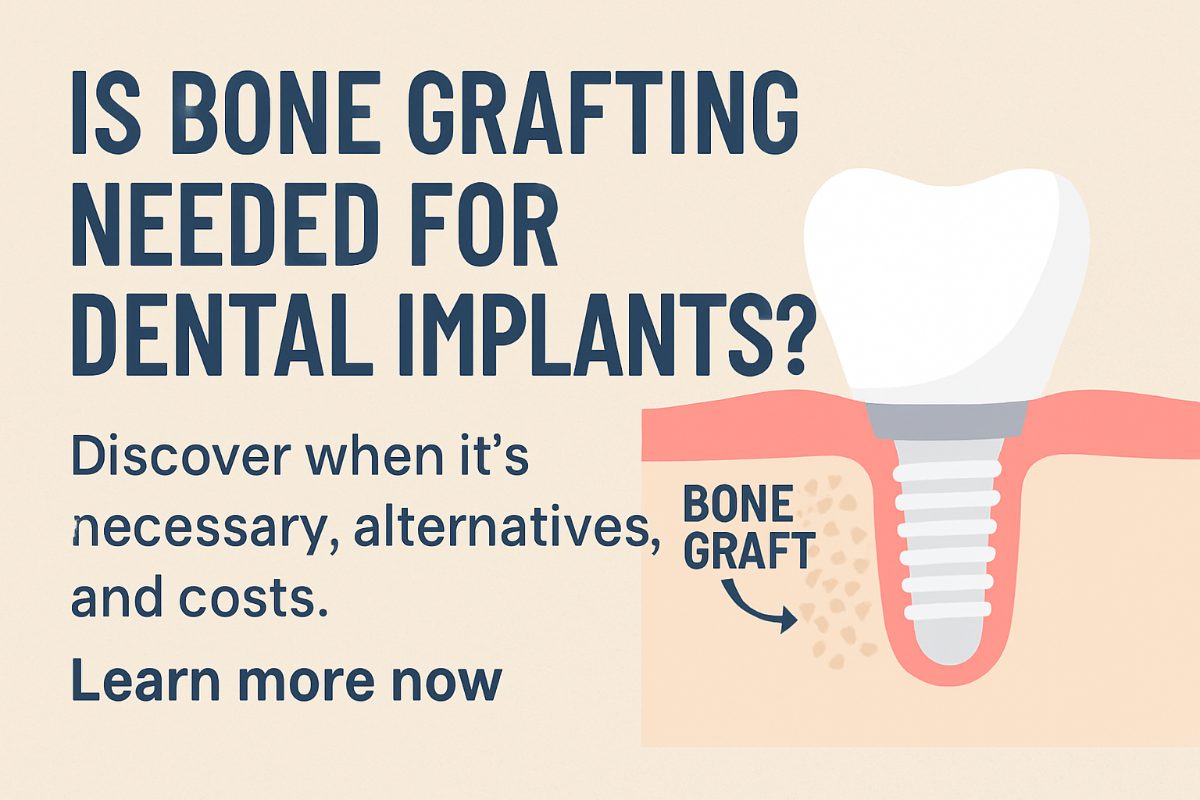
Bone grafting replaces or adds bone where it has shrunk after tooth loss, infection, or injury. Dentists use graft materials like your own bone, donor bone, or synthetic grafts to create a stable base for an implant. Without enough bone, an implant may fail or shift. Grafting improves long-term success by providing the volume and density needed for a solid implant connection.
When bone grafting dental implants is usually needed near Flowood, Mississippi
Amount and quality of existing bone
Long-term missing teeth often lead to bone loss. If X-rays or a CT scan show thin or short bone where the implant must sit, grafting is commonly recommended. The more bone lost, the greater the chance grafting will be needed to reach predictable implant stability.
Location in the mouth
The upper jaw, especially the back molar areas, tends to lose bone faster and sit close to the sinus. That makes grafts or sinus lifts more common for upper back implants. Front teeth often have better bone and may need less grafting, but each case is different.
Infection, trauma, or prior extractions
A history of infection, failed implants, or damaged tooth sockets raises the need for grafting. Removing infected tissue and rebuilding the ridge helps create a healthy, stable site for an implant.
Alternatives to bone grafting for dental implants
Short or mini implants
Short or mini implants can work when there is limited bone height. They avoid major grafting but have limits: they may not be suitable for full chewing forces or long-span restorations.
Zygomatic or angled implant techniques
For severe upper-jaw bone loss, zygomatic implants anchor into the cheekbone; angled implants use denser bone areas. These advanced approaches let some patients avoid extensive grafting, but they require an experienced surgeon.
Implant-supported dentures or bridges
Using fewer implants to support a denture or hybrid bridge can reduce the need for grafting. These solutions trade a removable or hybrid prosthesis for fewer implants and sometimes less invasive surgery.
What to expect if you need bone grafting for dental implants
Bone grafting steps are usually:
- Consultation and CT scan to map bone and plan graft size and location.
- Graft placement under local or IV sedation; graft materials may be your own bone, donor bone, or synthetic substitutes.
- Healing time—commonly 3 to 6 months for the graft to integrate before implant placement; some cases allow simultaneous graft and implant placement.
Common graft materials include autograft (your bone), allograft (donor), xenograft (animal), and synthetic options. Typical complications are swelling, minor bleeding, infection, or graft failure—these are uncommon with careful planning. Sedation choices like nitrous oxide or IV sedation are available to keep the procedure comfortable.
Cost, insurance, and financing for bone grafting dental implants in Flowood, Mississippi
Cost factors include graft type, graft size, whether implants are placed at the same time, and any additional lifts (like a sinus lift). Insurance often covers grafting partly when related to dental surgery, but many plans have limits. Many Flowood implant centers offer financing or monthly plans to spread costs—ask about in-office financing, third-party medical credit, or bundled pricing for graft plus implants.
How to pick the right provider
Look for a provider with:
- Advanced implant training and experience with complex grafting cases
- On-site digital imaging (CBCT/CT) and surgical guides for precise planning
- Clear explanation of options, timelines, and risks
- Comfort and sedation options
Ask how many grafts and implants they place annually and to see before/after photos of similar cases.
About Revive Denture & Implant Studio and Dr. Joseph Boone
Revive Denture & Implant Studio in Flowood provides on-site digital planning, CAD/CAM restorations, and sedation options. Dr. Joseph Boone has advanced implant residency training and experience with complex techniques, including zygomatic implants. The clinic emphasizes patient education, precise digital workflows, and affordability resources to guide treatment decisions.
Next steps — getting a personalized answer
The best way to know if you need bone grafting is a consultation with a CT scan and a custom treatment plan. Schedule a visit to review imaging, discuss alternatives, and get a clear timeline and cost estimate. Request a consultation or view the before/after gallery to see similar cases and learn what to expect for bone grafting dental implants in Flowood, Mississippi.